05. Employer Branding through SHRM for Recruitment and Selection
 |
| Employer Branding (Hochgatterer et al, 2021) |
- Positively distinguish the offering from competitors.
- Demonstrate the benefits of working at the organization.
- Illustrating the brand development and strength over time.
As per the research made by Papirfly (2019) published that 84% of job seekers consider the reputation of a company as an essential factor in their decision to join while 52% of candidates spend time researching the organization's website and social channels to learn more about their culture before applying. It is also observed that there is a 28% of chance of reduction of employee turnover when investing in employer branding strategies.
Creating a brand that interacts with and appeals to today's more web-savvy job seeker is essential and can have a number of advantages, such as:
- Increased employer appeal to talented people looking to work in the industry.
- Greater employee motivation as they experience a stronger sense of connection to and alignment with the brand values.
- Realistic reductions in the expenses of recruiting and long-term retaining fresh talent.
- A workforce acting as a team of brand ambassadors who actively spread the word about your company to potential consumers and candidates.
- A vision for your organization's future that is unambiguous and shared by all those connected to it, driving it in that direction.
"An employer branding strategy allows you to control and positively change the dialogue surrounding your company to ensure higher talent acquisition and retention. At its most basic, employer branding is how you market your company to job seekers and what employees say about your company as a workplace" Forcey (2020)
Steps to planning an Employer Branding Strategy
Step 01 Align the strategy with organizational needs
The organization's short- and long-term demands, as well as the goals it intends to achieve and the skill set it will need to do so, will define an effective strategy. Fortunately, it's not too difficult to match the employer branding approach with organizational requirements. Start by responding to a few fundamental questions such as the objectives of the organization in the next 1-3 years, new products and services in the pipeline, and talent gaps avoiding the obligations (Reiners, 2022).
The below example describes the strategic imperatives of the operations of Commercial Bank of Ceylon PLC and indicates the investment of employees as an operational need.
 |
| Strategic Imperatives (CBC, 2021) |
Step 02 Set actionable objectives
Setting measurable goals is the greatest approach to make sure that an employer branding plan aids the firm in achieving its goals. While each company must establish its recruitment objectives, well-crafted goals always have several things in common such as; Targets (specific and reasonable goals), Measure (establish metrics), Plans (establish resources, content calendar, and a timeline), Assign (conquer and meet deadlines) (Reiners, 2022).
Accordingly, the recruitment team of the HR department of the Commercial Bank has the sole responsibility for hiring employees with adequate knowledge and skills to perform their stipulated tasks. And Staff Development Team of the HR department has the sole responsibility of maintaining the training calendars and providing necessary training when requested.
Step 03 Define relevant Key Performance Indicators (KPIs)
This evaluates the success of an objective (Reiners, 2022). For example - Top-Level management provides KPIs for the HR department such as recruiting a specific number of employees within the year, the number of training to provide, arranging transfers within the organization, handling promotions on a timely basis, organizing employee surveys, and submitting overall reports.
Step 04 Develop a measurement plan
A measurement plan will guarantee that you have the tools necessary to gather and analyze the data you need to make wise decisions. Creating a plan is a simple process that involves tracking KPIs, collecting data, frequency of measures, analyzing the data for opportunities, and reporting the findings to stakeholders (Reiners, 2022). For example - employee engagement surveys can measure the correct analytical data.
Step 05 Allocate resources upfront
For example - creating an internal employer branding team within the organization is the most economical solution to minimize obstacles when branding the employer to attract possible candidates.
Step 06 Create target candidate personas
A candidate persona is created to help recruiters better understand the candidates they are chasing. It is a semi-fictional representation of your ideal candidate. It offers a perception of the driving forces behind job seekers' decisions to seek out, accept, or reject a new position (Reiners, 2022).
 |
| Candidate Persona for Banking Trainees (CBC, 2022) |
Step 07 Develop a compelling employee value proposition (EVP)
When new hiring is made, the employee value proposition (EVP) makes clear what is expected of both the candidate and the firm. It will act as the cornerstone for your marketing materials, guiding everything the company says and does when hiring new employees (Reiners, 2022).
Step 08 Examine Application Process
The employer brand is embodied in the application procedure, so be sure that understand what it's like from the perspective of the candidate. Ask prospective employees and recent hires how it was to apply for a job at the company. In order to identify areas for development, the team will benefit from having an outsider's perspective on the procedure (Reiners, 2022).
For example - Questionnaires such as; job finding, learning about the company, and sources obtained for identification of the job posting from recruits can be obtained to evaluate the hiring process.
Step 09 Retention
According to seniority level, each lost employee can cost a company anywhere between 30% and 400% of their annual income. Given this, it is surprising that just 30% of companies are utilizing their employer brand to increase retention. When developing an employer branding strategy, taking the time to consider employee retention can yield some very noticeable benefits (Reiners, 2022).
- Engagement - Seeking feedback from existing employees.
- Profitability - An engaged workforce is a profitable workforce.
- Advocacy - Your employees will be more equipped to spread this information among their personal networks once they are aware of your employer brand and the elements that make your company a desirable place to work.
Before creating employer branding materials, it's crucial to decide which channels that organization should use to contact candidates. An organization should find out where the potential candidates spend around to reach them there because not every channel is suitable for every business. HR should undoubtedly assist the marketing team in this effort (Reiners, 2022).
 |
| Starbucks (Forcey, 2020) |
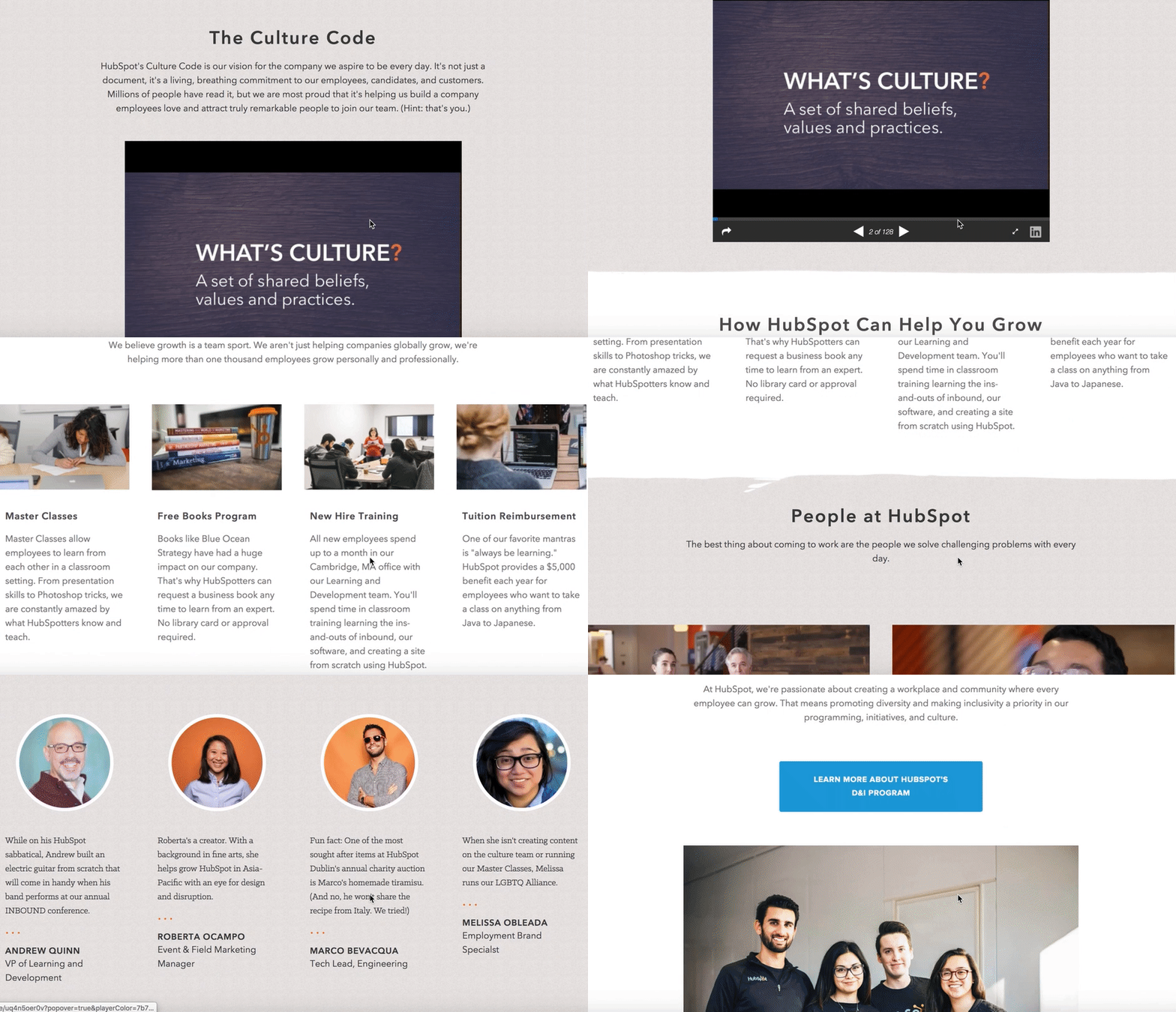 |
| HubSpot (Forcey, 2020) |


well explained, How Company Vision & Mission affect to the individual KPIs?
ReplyDeleteIndividual KPIs should be aligned and focus on the end goals of the organization which are Vision and Mission.
DeleteWell organized blog and clearly compair with another organization as well and this kind of Strategic recruiting is an approach to winning the best talent based on three components: employer branding, recruitment-directed marketing, and skilled selling. Combined, these components create effective responses to dynamic market conditions in support of an organization's strategic objectives also helpfull
ReplyDeleteAgreed. In conclusion, every strategic methods and practices are created to achieve the end-goal of the organization.
DeleteEmployee branding in HRM is good topic. you have given more valuable ideas
ReplyDeleteAppreciate the positive comment
DeleteIt is important to take time to consider employee retention when developing an employer branding strategy. What strategies do you suggest for this aspect?
ReplyDeleteWell organized article.Employer branding will help to hire new employees and create a strong company culture and even reduce marketing costs.and it lead to improve productivity.
ReplyDeleteAgreed. Appreciate the positive comment Udara.
DeleteEmployer brand is branding and marketing the entirety of the employment experience. It describes an employer's reputation as a place to work, and their employee value proposition. Candidates always looks for the brand name of the employer to select,
ReplyDeleteAgreed. Apart from the job functions, candidates are keen on looking at the employer brand before making a decision.
Deleteaccording to your point, after following above steps,how would a company can compete and achieve goals ?
ReplyDeleteEmployer Branding is correlated with the public image of an organization. How does an organization overcome challenges in maintaining the public image?
ReplyDeleteI think that Employer branding is a great way in recruitment, But the application & success of this process depend on the capacity & the financial position of the organization.
ReplyDeleteCompletely agree with your point of view Apsara.
DeleteA strong employer brand conveys that the business is a terrific place to work and an excellent employer. Employer brand influences market perception of the company as a whole, retention and engagement of current employees, and hiring of new personnel.
ReplyDeleteVery informational comment Madusha.
Delete